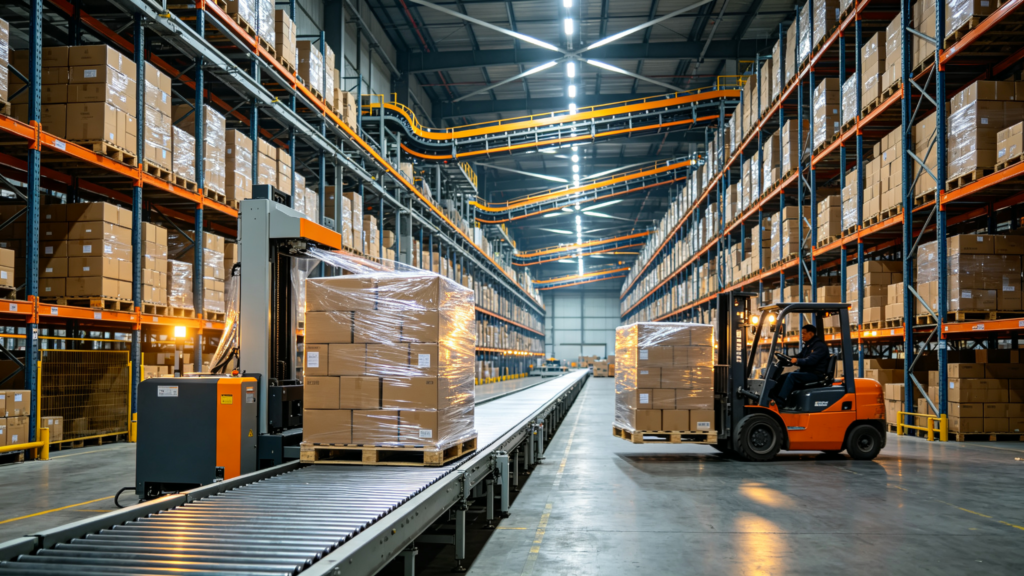

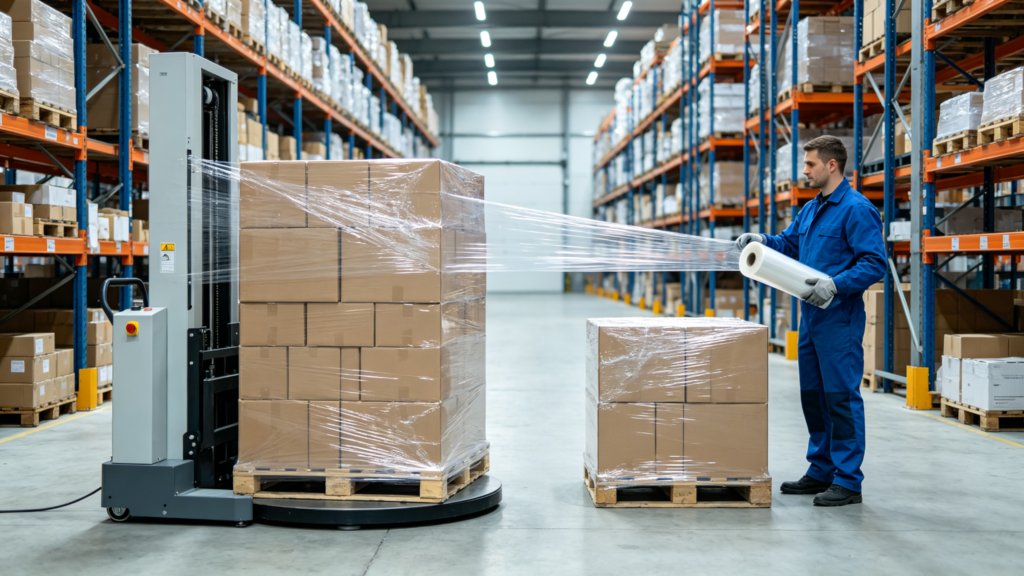
Stretch film, also known as stretch wrap or PE stretch film, is widely used in logistics, warehousing, manufacturing, transportation, and pallet packaging.
The right stretch film can stabilize palletized goods, reduce product movement during transportation, protect cargo from dust and moisture, and potentially lower overall packaging costs.
However, choosing the correct film is not simply a matter of selecting the lowest price. Film type, thickness, stretch performance, width, puncture resistance, and application conditions all affect packaging efficiency.
This guide explains the key factors to consider when selecting machine stretch film or hand stretch film.
Machine Stretch Film vs. Hand Stretch Film
Machine Stretch Film
Machine stretch film is designed for automatic or semi-automatic pallet wrapping machines.
It is commonly used by warehouses, logistics centers, manufacturers, distribution centers, and companies with high daily packaging volumes.
Machine stretch film generally requires:
Consistent film thickness
Stable stretching performance
Good puncture resistance
可靠的保持力
Low breakage rates
Compatibility with the wrapping machine
For automated packaging operations, high-performance machine stretch film can help improve wrapping speed and reduce manual labor.
Hand Stretch Film
Hand stretch film is designed for manual pallet wrapping.
It is particularly suitable for:
Small warehouses
Low-volume packaging
Irregular loads
Temporary packaging operations
Applications where automatic wrapping machines are unavailable
Hand stretch wrap provides greater operational flexibility because workers can adjust wrapping patterns according to the shape of the cargo.
Three Important Stretch Film Specifications
- Stretch Ratio
Stretch ratio describes how far the film can be stretched before breaking.
Higher stretching capability means more packaging area can potentially be covered with the same film weight.
For high-volume packaging operations, buyers may consider machine stretch film with a high pre-stretch capability. Actual performance should always be tested with the customer’s specific wrapping machine and cargo.
- Film Thickness
Stretch film thickness is commonly specified in microns (μm).
Typical applications may use films in approximately the 12–30 μm range, depending on cargo weight and packaging requirements.
Light and uniform products may require thinner film, while heavy products, sharp-edged loads, or long-distance shipments may require thicker or puncture-resistant film.
The goal is not simply to choose the thickest film. The better approach is to select the lowest film consumption that still provides sufficient load stability and protection.
- Film Width
Common stretch film widths include approximately 450 mm and 500 mm, although customized widths are also available.
Film width should be compatible with:
Pallet dimensions
Wrapping machine specifications
Load height
Wrapping pattern
Manual handling requirements
Why Puncture Resistance Matters
A pallet may contain cartons, metal parts, pipes, machinery components, or other products with sharp corners.
If the stretch film tears during wrapping or transportation, pallet stability can be significantly reduced.
For this reason, buyers should evaluate puncture resistance in addition to tensile strength and stretch performance.
A reliable PE stretch film manufacturer should be able to provide samples so customers can conduct real-world packaging tests before placing large orders.
How to Reduce Stretch Film Consumption
Companies looking to reduce packaging costs can evaluate several factors:
Optimize film thickness.
Use appropriate pre-stretch levels.
Adjust the number of wrapping cycles.
Match film specifications to pallet weight.
Use machine stretch film for high-volume operations.
Test film performance under actual transportation conditions.
The lowest-priced film is not always the lowest-cost solution. Cost per pallet is often a more useful purchasing metric than price per roll.
常見問題
Is PE stretch film recyclable?
PE stretch film is a polyethylene-based packaging material and can be collected through appropriate PE recycling systems where such systems are available.
Is machine stretch film better than hand stretch film?
Neither is universally better. Machine stretch film is generally more suitable for automated, high-volume operations, while hand stretch film provides flexibility for smaller or irregular packaging jobs.
Can stretch film be customized?
Yes. Depending on production capabilities, stretch film can be customized in thickness, width, roll specifications, packaging, and other performance requirements.
Why Choose MUTONG INDUSTRY for Stretch Film?
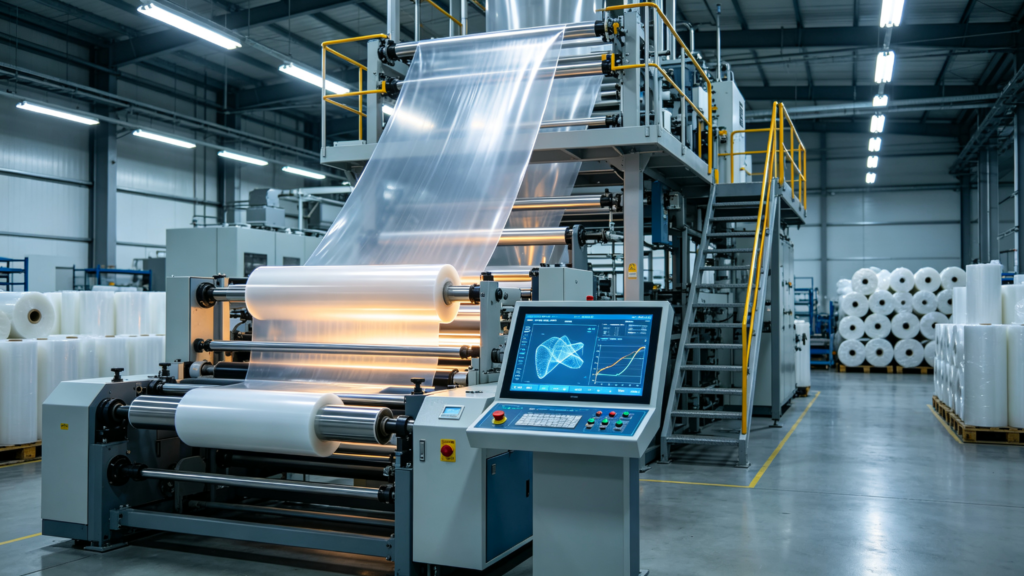
MUTONG INDUSTRY manufactures PE film products using multi-layer co-extrusion technology and provides customized film specifications for different packaging applications.
Customers can request samples and discuss requirements such as film thickness, width, stretch performance, roll specifications, and packaging before mass production.
Looking for a reliable stretch film manufacturer or custom PE film supplier? Contact MUTONG INDUSTRY for product specifications and a quotation.