
During manufacturing, processing, transportation, and installation, sensitive product surfaces can easily become scratched or contaminated.
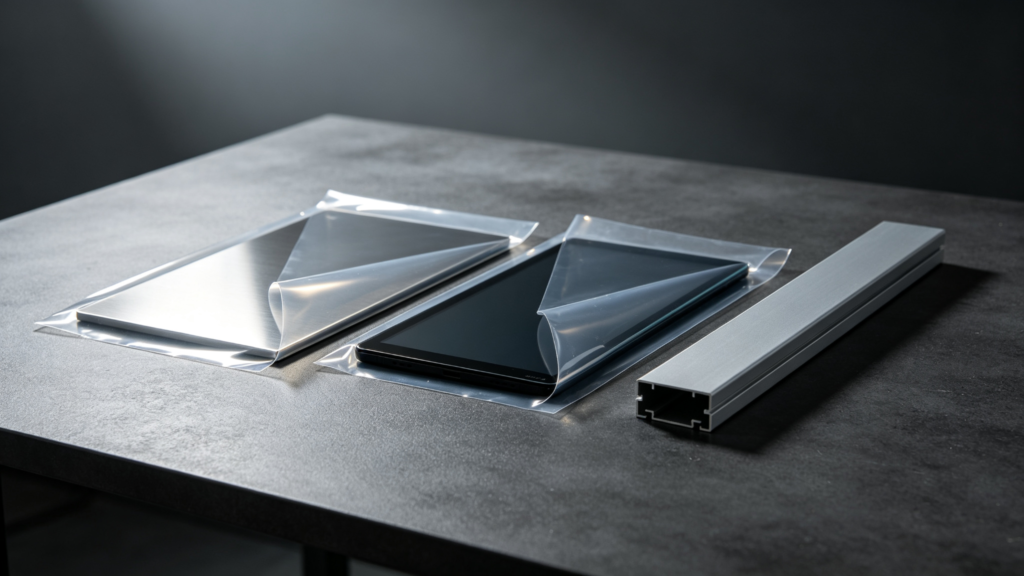
PE protective film provides temporary surface protection for products such as electronic displays, metal sheets, aluminum profiles, stainless steel, plastic panels, glass, and other finished surfaces.
The basic concept is simple: a polyethylene film is applied to the product surface and removed after processing or transportation.
The challenge is achieving the right balance between adhesion and clean removal.
Why Adhesion Is Important
If the adhesive force is too weak, the protective film may peel away during production or transportation.
If adhesion is too strong, removing the film may leave adhesive residue or affect the protected surface.
A properly designed protective film should provide:
Reliable surface adhesion
Clean peeling
Low residue
Good transparency where required
Suitable mechanical strength
Compatibility with the protected material
This is especially important for high-gloss and precision surfaces.
Common Applications of PE Protective Film
Electronics
Protective film can be used during manufacturing, assembly, handling, and transportation of:
Display panels
Electronic screens
Mobile devices
Tablets
Electronic components
The objective is to minimize scratches, dust, fingerprints, and surface contamination.
Metal and Building Materials
PE surface protection film is widely used for:
Stainless steel sheets
Aluminum sheets
Aluminum profiles
Plastic panels
Decorative surfaces
The film can help protect surfaces during cutting, bending, transportation, and installation.
Appliances and Automotive Products
Protective film can also be applied to appliance panels, automotive interior components, and other finished surfaces that require temporary protection.
How to Select Protective Film
Match Adhesion to the Surface
Smooth, high-gloss surfaces may require low-adhesion film, while textured surfaces may require a different adhesive level.
Testing is essential because the same film may behave differently on different substrates.
Consider the Cleanliness Requirement
Electronic and precision applications may require tighter cleanliness controls during film production and handling.
Define the Protection Period
Short-term protection and long-term outdoor protection have different requirements.
For extended storage or outdoor exposure, buyers should consider film and adhesive systems designed for the expected environmental conditions.
Always Conduct a Sample Test
Before mass production, apply the protective film to the actual product surface.
A practical test can evaluate:
Adhesion
Peeling force
Residue
Surface appearance
Temperature resistance
Storage stability
Can PE Protective Film Be Customized?
Yes.
A professional PE protective film manufacturer may provide customization including:
Width
Thickness
Color
Adhesion level
Roll length
Printing
Packaging
Printed protective film can also help companies display logos, handling instructions, product information, or warning messages.
FAQ
Why does protective film leave adhesive residue?
Residue can result from unsuitable adhesive formulation, incompatibility with the protected surface, excessive temperature, prolonged storage, or aging of the adhesive layer.
Can PE protective film be printed?
Yes. Depending on the product and application, protective film can be supplied with customized printing.
How long can PE protective film remain on a surface?
The appropriate protection period depends on the film, adhesive system, substrate, temperature, humidity, UV exposure, and storage conditions. Always conduct application-specific testing.
MUTONG INDUSTRY PE Protective Film
MUTONG INDUSTRY develops customized PE film solutions for electronics, metal processing, building materials, appliances, and other industries.
Our team can work with customers to determine suitable film thickness, width, adhesion, color, printing, and packaging specifications.